 Contested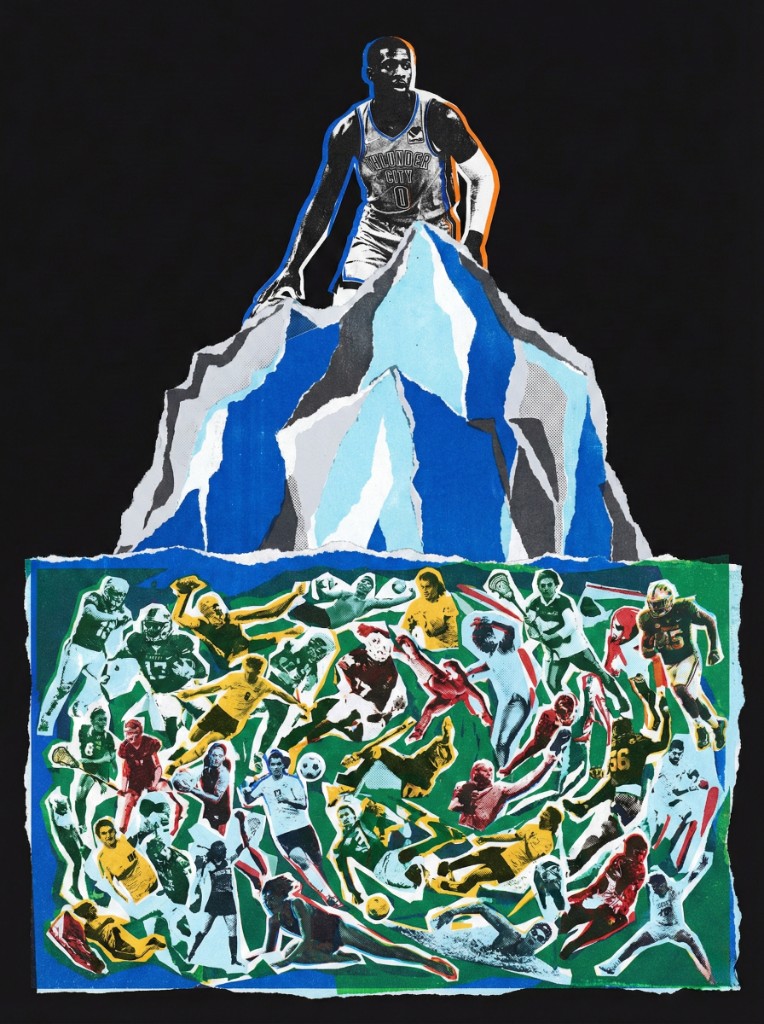
The NIL Middle Class: Why the Real Opportunity Isn't in the Top 1% of Athletes
Most NIL headlines focus on million-dollar deals. For brands, the real opportunity is the NIL middle class — mid-tier college athletes with engaged audiences, real credibility, and accessible price points.
The headlines make NIL look like a billionaires' game. Arch Manning's $7.1 million valuation. AJ Dybantsa's record-breaking BYU deal. Top quarterbacks netting over $1.3 million annually when you combine scholarships, commercial NIL, collective payments, and revenue sharing.
Those numbers are real. They're also irrelevant to most brands.
Only 0.3% of college athletes earn over $1 million. The average NIL deal remains under $1,000. NCAA data showed that while the average NIL amount from August 2024 to April 2025 was $53,643, the median was just $3,371 — meaning a tiny number of elite earners are pulling the average skyward while the vast majority of athletes are working with much smaller figures.
That gap between the top and the middle is where the real opportunity lives for brands.
What Is the NIL Middle Class?
The NIL middle class is the massive, underutilized tier of college athletes who aren't making headlines but are making an impact. Think of the Division II volleyball player with 12,000 engaged followers in a specific metro area. The mid-major softball player whose audience is 90% women aged 18-28 in the Southeast. The track athlete at a Group of Five school whose personal brand resonates with health and fitness consumers.
These athletes carry the same fundamental credibility advantage that makes athlete partnerships powerful in the first place — their audiences watched them earn something real through competition, discipline, and public performance — but they're accessible at a fraction of what top-tier talent costs.
According to OC&C Strategy Consultants, 68% of NIL deals are worth under $1,000. That's not a sign of a weak market. It's a sign of a massive long tail of athlete partnerships that brands can activate at price points comparable to working with nano and micro-influencers — but with fundamentally different credibility attached.
Why Mid-Tier Athletes Outperform on Engagement
The engagement math in influencer marketing is well established: smaller, more connected audiences drive higher engagement rates than massive ones. On Instagram, nano-influencers (1K-10K followers) average 2.71% engagement, while macro-influencers (500K-1M) average just 0.61-0.87%. On TikTok, the gap is even wider — nano-influencers achieve around 10.3% engagement compared to roughly 2-4% for macro creators.
Athletes amplify this dynamic. According to OpenSponsorship, athletes on social platforms average a 5.6% engagement rate overall, compared to 2.4% for typical influencers. MWW's analysis reported a similar finding, pegging athlete engagement at 5.6% versus 1.9% for influencers.
But here's what most brands miss: athletes in the middle tier — those with 5,000 to 50,000 followers — combine the high engagement rates of nano and micro-influencers with the credibility premium that only comes from being a competitive athlete. A lifestyle micro-influencer and a mid-major soccer player might both have 15,000 followers and similar engagement rates. But when the athlete recommends a product, 80% of fans say they're more likely to trust it — a trust premium the lifestyle creator simply can't match.
That combination of accessible pricing, high engagement, and athlete-level trust is what makes the NIL middle class such a powerful channel.
The Audience Alignment Advantage of College Athletes
Celebrity athlete deals are a blunt instrument. When you partner with a household name, you're paying for broad recognition that reaches millions of people, most of whom probably don't match your customer profile.
Mid-tier college athletes offer something different: precision.
A college athlete's audience is geographically concentrated around their school and home region. It skews toward a predictable age range (18-34). It clusters around specific interests tied to the sport and the athlete's personal content. And it's built on genuine fandom — not algorithmic discovery.
For brands with regional footprints or specific demographic targets, this concentration is a feature, not a bug. A restaurant chain in the SEC footprint, a fitness brand targeting college-aged women, or a supplement company focused on training-minded consumers can find athletes whose audiences overlap with their customer base at a rate that no macro-influencer campaign could match.
MWW noted that brands are already seeing meaningful ROI from athletes at mid-major programs, Division II and III schools, and non-revenue sports — not just from the football and basketball stars who dominate the conversation.
Women's Sports: The Most Underpriced Opportunity in NIL
If the NIL middle class is undervalued, women's college athletes are the most undervalued segment within it.
Women's basketball now ranks in the top five in overall NIL activity. NIL compensation in women's volleyball has seen explosive growth — a 365% increase from year one to year two, followed by a 123% increase in year three. From day one of NIL through July 2024, volleyball's total growth rate hit 935%.
Yet there's still a massive gap. NCAA data showed the average disclosed NIL deal value for Power Four women's athletes was just $554, with a median of $55. That means brands can partner with credible, engaged women athletes for a fraction of what comparable reach would cost in any other channel.
The engagement numbers back this up. Women's basketball engagement outpaces male counterparts, and women's sports NIL deals deliver strong results for a fraction of the cost of other sports. For brands in wellness, fashion, beauty, food, and lifestyle categories, women's college athletes represent an audience-aligned, credibility-rich, budget-friendly partnership channel that barely existed five years ago.
Why Brands Keep Ignoring the Middle (and Why That's Changing)
The NIL middle class has been hiding in plain sight for years. So why haven't more brands moved on it?
Three reasons:
- Discovery is hard. Finding the right mid-tier athlete for your brand isn't like browsing a celebrity endorsement menu. There are hundreds of thousands of college athletes across 1,100+ NCAA institutions. Without a systematic way to search by audience demographics, geographic alignment, sport, engagement quality, and brand fit, most brands default to the athletes they've already heard of — which means overpaying for the top 1%.
- Operations are messy. Even if you find the right athlete, managing the partnership requires contracts, compliance with NIL regulations (including the new College Sports Commission reporting requirements for deals over $600), content approvals, payment processing, and performance tracking. Do this once and it's manageable. Do it across 20 athletes and it's a full-time job.
- The mental model is wrong. Most brand marketers still think about athlete partnerships in terms of celebrity endorsement — one big name, one big deal. They haven't made the conceptual leap to thinking about athlete marketing as a scalable channel where you run 10, 20, or 50 mid-tier partnerships simultaneously, the same way brands learned to run 50 micro-influencer partnerships instead of one mega-deal.
The brands that are making that leap, though, are seeing results. And as the NIL market continues to mature — projected to reach $2.6 billion in 2026 with marketing deals specifically approaching $1 billion — the infrastructure to support this approach is catching up.
How to Build a Mid-Tier Athlete Partnership Strategy
If you're a brand looking to tap into the NIL middle class, here's how to think about it:
- Start with your customer, not with athletes. Define your target demographics, geographic markets, and the values your customers care about. Then work backward to find athletes whose audiences match. The right athlete for a Denver-based outdoor brand is completely different from the right athlete for a Southeast-based meal prep service — and that specificity is the whole point.
- Think portfolio, not poster child. Instead of one big-name deal, allocate the same budget across 10-15 mid-tier athletes. You get more total reach, more content assets, more audience diversity, and a natural A/B test to see which athlete-brand combinations perform best. If one partnership underperforms, it doesn't tank the entire program.
- Treat it like a performance channel. Give every athlete partnership a tracking mechanism — unique promo codes, UTM links, dedicated landing pages. Measure cost-per-engagement and cost-per-acquisition the same way you would for paid social. The brands winning in this space aren't running athlete partnerships on vibes; they're running them with the same rigor they'd apply to any other paid channel.
- Prioritize long-term relationships. One-off sponsored posts are the weakest form of athlete partnership. The real value compounds when an athlete is a genuine, ongoing ambassador for your brand — when their audience sees the product show up repeatedly in an organic context, not as a one-time ad. Mid-tier athletes are far more likely to agree to long-term arrangements because the economics work for both sides.
The Platform Gap (and How Contested Fills It)
Running mid-tier athlete partnerships across many markets requires infrastructure that most brands don't have and most existing tools weren't built for.
Traditional influencer platforms bolt an "athlete" filter onto a system designed for content creators. They optimize for follower count and content performance, not for the audience alignment, deal documentation, and geographic specificity that define athlete partnerships.
NIL compliance tools were built for the other side of the market: helping athletic departments and collectives manage regulatory obligations. They don't solve the brand's problem of discovery, matching, and campaign management. Contested does not provide compliance services.
Contested was built specifically for this gap. The platform connects brands with athletes through intelligent matching based on audience alignment, handles the full campaign lifecycle from discovery to payout, and provides the performance analytics that let brands treat athlete partnerships as a real, measurable channel. Matching, outreach, contracts, content management, deal docs, FTC disclosure templates, payments, and reporting in one place, designed for the way mid-tier athlete partnerships actually work.
Whether you're a regional brand running your first five athlete partnerships or a national brand scaling to fifty, the infrastructure exists to do it without a dedicated team or an agency retainer.
The Math Favors the Middle
The top 1% of NIL earners will keep making headlines. But the marketing opportunity in NIL was never about competing with Nike for the next Arch Manning.
It's about the hundreds of thousands of athletes whose audiences are engaged, whose credibility is real, and whose partnerships are accessible at price points that work for any brand with a marketing budget. It's about the fact that a portfolio of 15 mid-tier athlete partnerships can deliver more total engagement, better audience alignment, and stronger trust signals than one celebrity deal at the same cost.
The NIL middle class is the most underpriced marketing channel in sports. The brands that figure this out first won't just get a good deal — they'll build a competitive advantage that scales with the market.
Contested is the athlete partnership platform built for brands that want to access the full depth of the athlete market — not just the top 1%. Find athletes who align with your audience, manage every campaign in one place, and measure what matters. Get started at Contested.com.
Sources
- RallyFuel — How NIL Earnings Are Changing: 2025 Growth, Trends, and Projections
- Paint Touches — NCAA NIL Data Shows Men's Basketball Players Highest Earners
- OC&C Strategy Consultants — Scoring Big: Unlocking the NIL Opportunity in College Sports
- Social Cat — Influencer Marketing Report 2025
- Stack Influence — Influencer Marketing Stats 2025
- OpenSponsorship — Sport Influencer Marketing Statistics
- MWW — College Sports & NIL in 2025
- Opendorse — The Rise of College Volleyball: NIL and Growth of Women's Sports
- On3 — NCAA's NIL Assist Deal Database: Women Athletes Earning Power
- SportEpreneur — NIL Pros and Cons 2026
- Sportico — College Sports Commission reports NIL Deals
- Opendorse — NIL at 3: The Annual Report